Colour and pattern often get most of the attention when choosing tile for your home. But another detail can significantly affect both the appearance and performance of your space: the Tile Finish.
Two of the most common options are Matte and Polished Tiles. While the same tile design may be available in both finishes, each can create a very different look and feel once installed.
From light reflection and maintenance to slip resistance and room application, understanding the differences can help you choose the right finish for your renovation.
Matte tiles have a smooth or subtly textured surface with little to no shine. Instead of strongly reflecting light, they create a softer and more natural appearance.
This makes matte finishes especially popular in contemporary, minimalist, stone-inspired, and organic interiors.
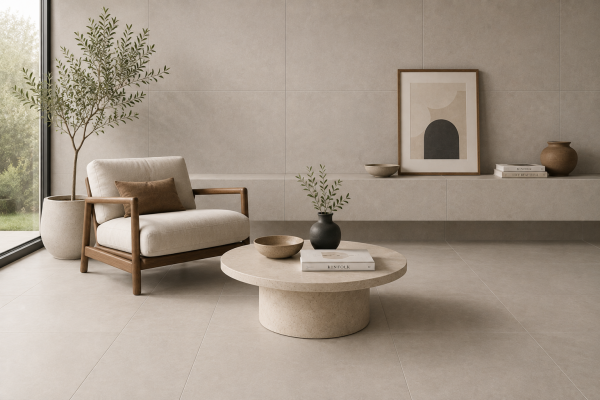
Matte tiles are often chosen because they:
Because finishes and performance characteristics vary between products, always confirm that a particular tile is suitable for its intended application.
Polished tiles have a smooth, glossy surface that reflects more light. The polishing process gives the tile a sleek finish that can make colours, patterns, and veining appear more pronounced.
Polished tiles are particularly popular when homeowners want to create an elegant or luxurious interior.
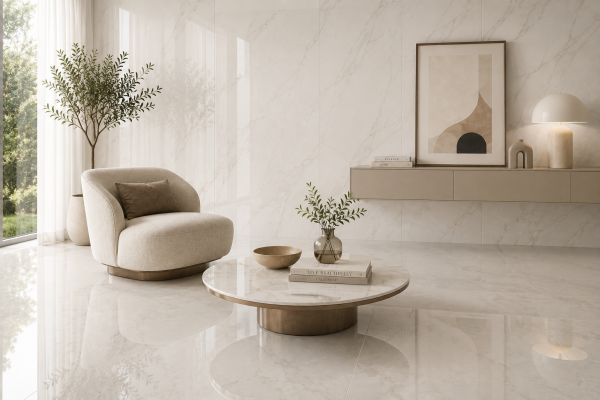
They can:
Polished finishes can be particularly striking on Large-format Porcelain Tiles, where fewer grout lines allow the reflective surface and tile design to become a major visual feature.
Although appearance is the most obvious difference, finish can also affect how a tile performs in everyday use.
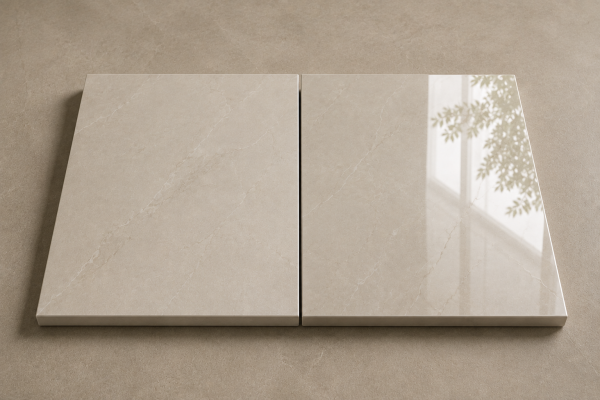
Matte tiles tend to create a softer, more relaxed look and generally conceal everyday marks more easily.
Polished tiles, on the other hand, reflect more light and create a brighter, more dramatic finish, but water spots, footprints, and smudges may be more noticeable.
Another important consideration is traction. A polished surface can become more slippery when wet than some matte or textured surfaces. For bathrooms, entryways, and other areas exposed to moisture, homeowners should consider the specific product's slip-resistance characteristics rather than choosing based on appearance alone.
There isn't one finish that's automatically better for every space. Think about how the room will be used.
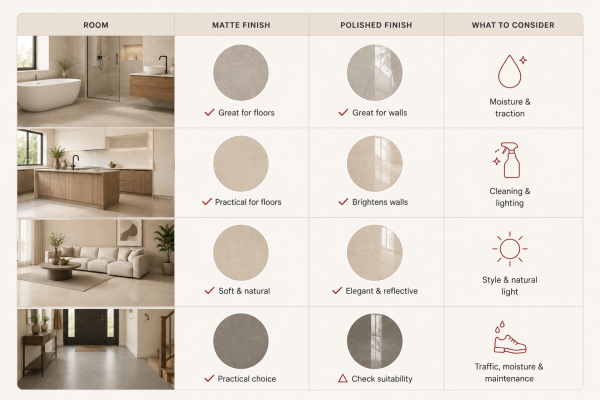
Tile finish can dramatically change how light behaves in a room.
If a room receives limited natural light, a polished finish can help reflect available light around the space. This can make the interior appear brighter and more open.
In rooms with abundant natural light, matte tiles create a softer appearance with less reflection and glare.
Before making your final choice, look at tile samples under the lighting conditions in your own space whenever possible. A finish that looks subtle in a showroom can appear very different beside a large window or under strong overhead lighting.
Both matte and polished tiles can be relatively easy to maintain, but they behave differently visually.
Polished surfaces may make fingerprints, streaks, water spots, and footprints easier to notice because of their reflective finish.
Matte surfaces generally disguise these everyday marks more effectively, although textured surfaces may sometimes require additional attention during cleaning.
The tile material, surface texture, grout colour, and installation location will all influence long-term maintenance.
Absolutely!!
Using both finishes within the same space can add subtle contrast without introducing another colour or pattern.
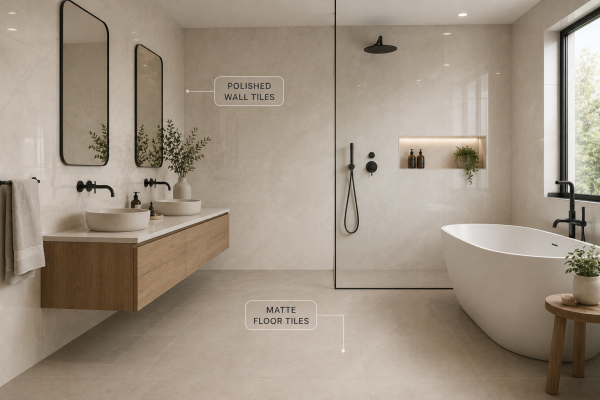
For example, you might use a matte tile on the bathroom floor and a coordinating polished version on the walls. Because the colour and design remain consistent, the change in finish adds dimension while keeping the overall space cohesive.
This approach can work especially well when a tile collection is available in both matte and polished finishes.
Choose Matte tiles if you prefer:
Choose Polished tiles if you prefer:
Ultimately, the best finish depends on where the tile will be installed, how the space is used, lighting conditions, maintenance expectations, and your preferred design style.
Matte and polished tiles can completely change the character of a room—even when the colour and pattern are exactly the same.
Rather than choosing based on appearance alone, consider how the finish interacts with lighting, moisture, foot traffic, maintenance, and the overall atmosphere you want to create.
If possible, compare matte and polished samples side by side before making your final decision. Seeing both finishes in person can make subtle differences much easier to understand.
Visit Tile Solutions in North York, Mississauga, or Kitchener to explore different tile colours, patterns, sizes, and finishes and find the right combination for your project.
(By: Khanh Linh Le)